
The Spiritual Practice of Birding
by Ragan Sutterfield
When the weather becomes warm enough, my wife and I wake early and take our coffee to the porch. Our yard is a place we have cultivated, as best we can, for hospitality. Native plant sale after native plant sale, we have filled in the lawn with elderberry trees, cup plants, switch grasses, inland sea oats, milkweeds, pawpaws, and dozens of other wild, local flora. In the summer months, when all is green and flowering, it feels lush and abundant. There is a sense of calm that comes from such a presence of life, a sure knowledge that I am a member in a community of creatures.
As we talk through our dreams, the day ahead, our reading and thoughts, I am also paying attention to the birds. I’m not distracted, but rather immersed in a constant awareness of who is here, a skill trained through years of watching and listening that I simply can’t turn off. Birding is the name for this practice of paying attention. Sometimes it is a deliberate, focused practice. There are seasons like spring migration, when all my skills are put to the test, sometimes spending sixteen hours straight in the field. On such days my senses are turned on, and my mind is fully engaged in the work of sorting through the identification of that song or this flash of color. When I do this kind of birding, it is as though I have entered a different kind of time. There is nothing else in the world other than the intense search for this bird and the puzzle of what it is, the wonder of what else might be hiding in plain sight.
Birding offers thousands of such moments of encounter with creatures carrying out lives of wonder and variety before which I can only stand astonished.
Years ago I heard a researcher on burnout who said that to avoid a loss of purpose in our work, it is important to have activities in which we can completely disengage from our normal life. I hate to turn something I love into a utility, but love does have its uses, and birding has been my way into this place of letting go. It is a total occupation of my attention, one that draws me out of myself and toward the wild world of which I am only a member. To watch a Magnolia Warbler, bright with yellow and banded with black, flitting with flashes of its white wings and tail among the locust trees, is to see a creature in but a moment of a life that spans countries and regions beyond what I could imagine. This bird that weighs less than a slice of bread, spent its winter among spider monkeys in Central America, and will nest in the boreal forests of Canada, many at a latitude farther north than I’ve ever traveled. And yet, here on this one day in May, it has stopped on its journey to feed at a park near my house. Birding offers thousands of such moments of encounter with creatures carrying out lives of wonder and variety before which I can only stand astonished.
Most of my birding, however, doesn’t come in such times of focus, in the deliberate practice of attention in the field. Usually, my birding comes by noticing a passing hawk over the interstate or being drawn to the chip note of a warbler as I’m walking to the library.
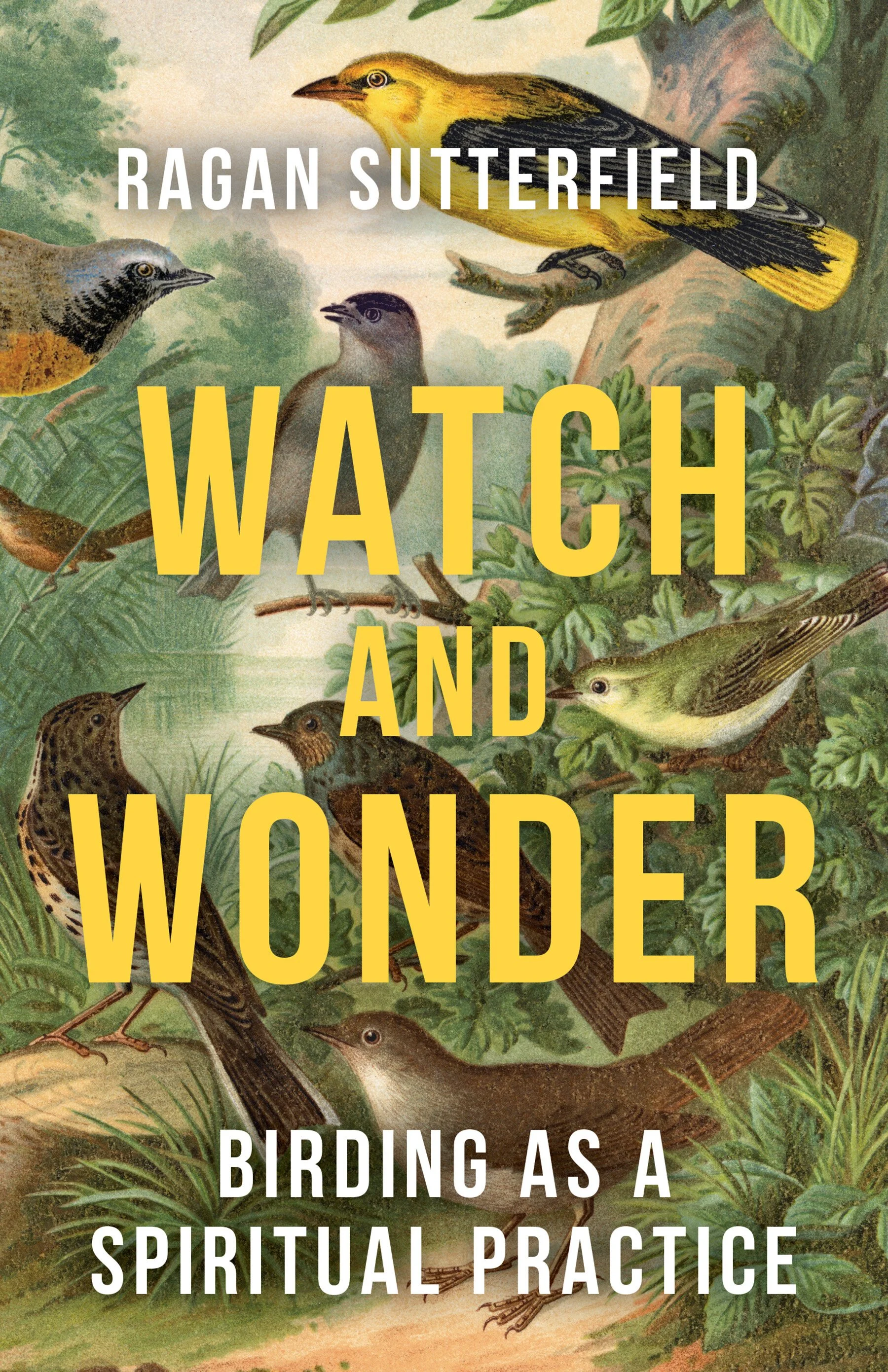
Birds are everywhere and available to offer the gift of their presence to anyone ready to watch and listen, to let their attention be caught by a song or a flash of movement. It doesn’t take binoculars or even going beyond your porch or stoop. Anywhere with a view outside will do. Spend a little while, scanning the sky and the nearby vegetation. Watch for motion. Listen carefully, for even when they are not visible, birds are singing and calling. Use apps like Merlin from the Cornell Lab of Ornithology as a help in learning the songs, but don’t let it mediate your experience. Buy a good field guide, and flip through its pages, searching for the bird that fits the size, shape, and geography of your bird. When you’ve come to know which species is which, at least the common ones you encounter in your day, then learn the stories of each bird’s life through books like What It’s Like to Be a Bird by David Sibley or websites like AllAboutBirds.org.
On my porch this morning, I watched as an American Robin and a Northern Mockingbird tussled over territory, and a Great Crested Flycatcher sang from the top of a nearby oak. On the power lines across the street, a pair of Mourning Doves sat, side by side, suddenly flushing as a Cooper’s Hawk cruised through. Without birding, I would never have known that I was in the presence of such wonders. It has become as essential to me as prayer, and it is a form of prayer at its best.
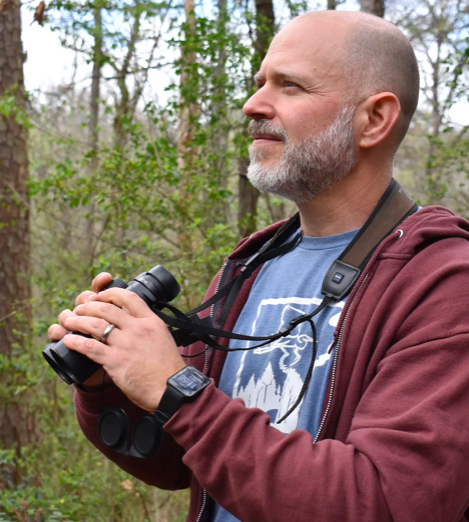
Ragan Sutterfield is a writer and Episcopal priest from Arkansas. His most recent book is Watch and Wonder: Birding as a Spiritual Practice. He writes regularly at thewaywepractice.com.