Creating a Time Map
by Aizaiah G. Yong
In our fast-paced, technologically “advanced” society, we suffer from a diminished relationship with time. We are over-worked and too easily treat ourselves like machines of production rather than living beings in need of tender care, presence, and support.
Our own fractured relationship with time shows in our speech as we often use phrases that promote scarcity: such as “down to the wire,” “hurry up,” or “in a race against time.” Each depicts an understanding of time that it is limited, finite, and somehow that there is never enough!
Yet, from a spiritual perspective, time has many layers and dimensions to it, and there is an invitation for us to live with a sense of “fullness of time” — a way of being that trusts where we are, where we need to be, and that we are called to meet the moment with courage and joy.
Time has many layers and dimensions to it, and there is an invitation for us to live with a sense of “fullness of time.”
As someone with four young children, a full-time job, and many other relational commitments, one of the best practices for me has been a practice of time mapping. Time mapping is a way of prioritizing the things that matter most in a way that is also spacious, flexible, and adaptable to whatever life brings. This idea was first mentioned in my book Sacred Parenthood (Herald Press 2025). I have found the practice of time mapping to be a wonderful compliment to my rhythms of scheduling and calendaring.
A time map asks that we intentionally reflect on our lives from week to week and then look to the week ahead with more intentionality, targeting the specific movements we wish to follow.
To begin you might do this on a Saturday or Sunday and recall the events of the past week. Simply note: in what moments did I come most alive? In what moments were there barriers or obstacles to my sense of aliveness? Where did I feel a sense of “flow” or “yes” to life? Where did I feel closed down?
Whatever the responses are, the invitation is to extend nonjudgmental compassion and care. And to notice, trusting that whatever happened, there is wisdom within–that we can learn to identify and align ourselves with.
Then, as you shift to thinking about the week ahead, begin to reflect on the kinds of movements you wish to embody. Movements could involve the kinds of qualities you hope to experience and the kinds of activities that promote them. For example, perhaps rest will be vital, and so winding down the mind and body will be helpful in the evening. Perhaps reflection is important, so identifying times to read and write are necessary.
In whatever you identify, the invitation is to think about times of the day—I separate them by early morning, morning, mid-day, evening, and late night—but you might only have three.
What happens next is to put the movements on a time map. This is different from scheduling or putting a time limit on the activity. For example, you might say in the mornings this week, I want to have a few days of dedicated silence or reading. Or you might say I would like to spend time in exercise. But whatever it is, see if you can create 5–7 time blocks (not specific times) where you will intentionally act on these movements. Then see if you can find yourself living out those movements, reflecting on them, and returning to them throughout the week. You want to complete your time map with as many movements that feel important to you such as reflecting, cleaning, time with others, but allowing yourself to have all the movements within the week that you desire.
While this practice is transformative personally, it can also impact those whom you share daily life with. In our home, we post a weekly time map so others can see what the movements we hope for are and to support one another to realize our deepest yearnings.
May this practice be one that restores a life-giving relationship with time, overcoming stress, feeling over-burdened, or hurried. And may the time you spend with self, others, our world, and the Divine Presence be full of laughter, joy, care, and compassion—so that life may thrive! And so it is.
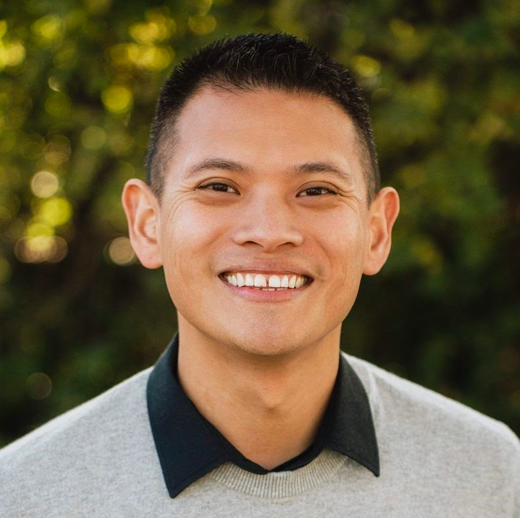
Rev. Dr. Aizaiah G. Yong, PhD, (he/him) is a scholar-practitioner of spirituality and mysticism and ordained pentecostal clergy in the Christian Church (Disciples of Christ) with strong ties to the Fellowship of Affirming Ministries (TFAM) & the City of Refuge UCC (Oakland, CA). His life and work are deeply rooted in the lived experience of navigating complex identities bridging academic theology, executive stewardship, and psychospiritual care to create spaces of radical belonging. He currently serves as the Executive Director of the Collegeville Institute (CI) for Ecumenical and Cultural Research. At this historic interdisciplinary residential research center, he advances intercultural dialogue and cross-sector innovation through rhythms of contemplation, community discernment, first-person reflection, and evidence-informed approaches to promote collective healing.