
Percy in Dust
by Louis Bourgeois
1.
There were these bones I played with alongside a barren ditch. They were armadillo bones and these bones gave me much pleasure in an abstract way that I cannot fully explain because I am incapable of saying what I mean when I want to. I know that alongside this barren ditch grew trees that made shade, of that I am certain. I also know that I can think of nothing but these bones and my little brother. So it must be that the armadillo bones and my brother are significant enough to write about. My poor dear brother has been dead for long time now.
It was a homestead where we established ourselves, having tamed the land with furious brash optimism of the purest kind. Optimism leads to disaster in my opinion. We built a large house with tall ceilings and high windows. We had fine crops and we raised all sorts of animals including, ducks, geese, pheasants and rabbits. The rabbits concerned me most of all, for I had to kill the rabbits three times a year with a heavy pipe, breaking their necks smoothly, dozens of rabbits three times a year. There is no safety on the homestead.
I could just sit facing the formation of armadillo bones alongside the barren ditch for hours, noticing nothing. What did I do with these bones? I did nothing with the bones but look at them and look into the woods, look up to the sky, look down the road. Cars came down the dusty road, people stared at me. They never said anything when they passed by; nobody ever said anything to me. All my life has been nothing but these bones and this empty dusty road; I have never left the homestead.
There was never anything in our huge house. A few books, very few. We had toys though, and guns, many guns, some firewood, and a few pots and pans. We built this house because we were strong and we hated the city.
The bones were distinct like great art. The ditch was interesting too, like canyons are interesting. An old man came waddling by one day while I was fooling with the bones. He didn’t say anything; he just pointed his cane to the sky and continued toward his house. I remember his house because I was sent to clean it after he died. People always sent me to clean but they won’t let me clean in any real sense. The position they give me is always abstract, here, in the village, on the homestead, in the world.
2.
I remember now, I remember when I went to them and asked for a position as grave maker or grave stone designer. They refused. I was to clean and that was it. I am a rebellious janitor though, and sometimes I don’t clean, and when they come at me, I run. I always return when I’m starving and beg them to let me clean. They give me a hard time about letting me back in but they do eventually; I’m a good janitor when I’m starving.
The old man’s house was a dark hole filled with products of all kinds. Did this have something to do with why he died? Could he not escape these products? Can products kill? I think the overwhelming number of products in this old man’s house was a manifestation of his insanity and his subsequent decline toward death. These products depressed me in such a way as to mark me for life, and the old man died a horrible death with the television on. One day, I’ll give up these bones and forget the products.
3.
It’s hard not to be honest out here on the homestead with all its trees and dirt roads.
Tall trees blowing in the wind, dust everywhere. All my life there has been nothing but dust, bones, and beauty. It’s hard not to be honest out here on the homestead with all its trees and dirt roads. If there were a lot of books out here things would be different I suppose. I suppose that people would be self-conscious and arrogant with distorted moments of humiliation. But there aren’t a lot of books and so there is a lot of honesty. Strangely enough though there isn’t a lot of life.
The teachers come of course; the teachers come at least three times a week. The ugliest people who come out here are the teachers. I mean their physical features are hideous. If you told them they were ugly, being as honest as we are out here, they would simply elaborate on some crackpot “theory” explaining how you are not thinking right. As if logic, their logic, was the beginning and end of all discussion. As if there was only one logic, a universal logic. You cannot argue with these ugly people; they do not understand ugliness, the very thing they should be concerned about, their own ugliness. I mean to say, they try to impose their own ugliness on us, the beautiful villagers.
They don’t fool me, the ugly teachers, with their standardization. They try to standardize everything with atrocious charts and boring language. The ones who are easily fooled, the ones who are educated by the “teachers,” are sent to the city to work in offices and factories. The ones who go to the offices often make less money than the ones who go to the factories. Where now are the rewards they promised? I mean, the rewards for those who were educated enough to work in the offices with the nasty language one finds in offices?
They try to standardize our English as well as our beautiful French. They want to destroy our French by destroying our English. They have to do this because they are miserable, and they want others to be as miserable as they are. One day, perhaps we’ll kill all the teachers and free our language. Language should come from pure nature. Not the teachers’ ugly books. And I’m not talking about Tolstoy here, or Beckett and Shakespeare. I’m talking about those books they chain us with in order to work better for them in the city. The city is a slave house run by teachers who are too ugly to stay in the village. Poor teachers! I wish you all a slow and miserable death.
4.
How did this armadillo die? Was he hit by a car? If so, why are his bones on the other side of the ditch? If he was hit by a car it would seem that his bones would be along the road’s edge. But they are not; they are on the opposite side of the ditch, in the rut of the tractor that passed by long ago. Before the bones even. They are lying in the dust of the tractor’s movements. Perhaps the armadillo was very old and had to die here while on his way to get water? Perhaps he was shot by some farmer on his way to the fields? Or perhaps he was killed by a menacing child hunter? Perhaps ten thousand years of Earth’s history is represented in these armadillo bones? Perhaps not. Heat, dust and bones.
5.
My only friend is Mike. Mike is an epileptic. Quite frequently he says he wants to die. I ask him why. He says others laugh at him because of his fits. I say to him, that I do not laugh when he has a fit. Mike says that I am not like the others. He says that I have a divine gift not yet discernible. I ask him what he means by that and he says he doesn’t know. Mike talks like an Indian, but Mike is not an Indian. Mike is pure Anglo-Saxon, but because he is an outcast he speaks like an Indian. Mike is twenty-five and I am twelve. He squats and plays with the bones with me. Sometimes he goes into a fit and I have to hold his tongue down with a dirty stick.
Mike tries to play guitar, but he can’t play, he doesn’t have any talent. Mike will never be able to do anything but have fits and eventually die. Mike is an object in nature, he has no will, and he knows this about himself. This is why Mike can play with the bones authentically. Mike will die young and then what? Why was Mike born if he is only going to die? One should not get born if one is only going to die. I will never die.
6.
Writing is easy; the teachers make a big deal out of it because they can’t write. Except for tests, they can write tests blindfolded. Why are they concerned with finding out what I know? Is it because they are looking for answers themselves? The other day I gave them an essay and they were appalled. The mere frankness of my words startled them, for they are accustomed to only contrived words.
I wish the teachers would leave me alone; they are contaminating my mind, my words, my writing. They don’t understand that my true teachers are these bones, dust, heat, and trees.
7.
The Lynch Man owns the largest settlement out here. His house is on forty acres of prime dry land. The rest of us live near the swamps and bogs. When it rains it floods and all that we have is ruined. How did the lynch man get his land? No one has ever talked to him and few have even seen him. I sometimes dream of the lynch man’s forty acres. The dreams are always beautiful! Sometimes I am walking with his herd of goats, other times I dream I am fishing in his huge pond stocked with large bass, and I fish until all three of my wooden buckets are filled over the brim. There are times when I dream that I’ve shot a dozen large pheasants, or doves and quail. One day, the lynch man will die and his land will mean nothing to him. I will always have his land in my head. I will always have these dreams. There is nothing he can do about that. He cannot take my dreams, yet I can take his land. I have captured his land. I wonder if he suspects this. Would he chop my head off if he found out? After all, he is the Lynch Man. I wonder if other homesteaders are taking his land by dreaming of his land?
8.
Immaculate death! The bones have captured everything and nothing. I have a complete education because of these bones. No one told me about them; I discovered them on my own. I wasn’t searching for anything. Yet, I found these bones that are now so much a part of my life. I am sure the teachers would not like my habit of playing with these bones. Do bones scare teachers? How many bones does one go through in a lifetime? What about dust? How much dust does one go through in life? And how many teachers?
My family, and two dozen other families, moved out here to escape the lie of the city. We were not necessarily poor people; we simply didn’t like the city. I didn’t like the city; I was always looking for trees. I would climb trees and I would carve words into trees. Back in the city my words are still there. That’s a strange thing to contemplate, that my words may still be there for years. Not the living trees I carved on but the dead ones.
All books are trees.
It is so silent out here that if you concentrate long enough things can move on their own. I have often tried this with the armadillo bones. If I could get them to move I would ask nothing more of myself. But they don’t move. I don’t have enough faith. I am a worried child. Everybody says so. They say I am a worry wart and will suffer from ulcers all my life. I do worry, and I don’t know why. Everything seems important to me. I tell them this and they say it is unusual for someone my age to have such thoughts. I don’t have any faith. People want me to accept things without knowing why. They simply say, “That’s the way it is,” or “It is so,” or “You shouldn’t ask those questions until you’re older.” I wonder if they ever think about what they are saying? I know I am not born pure genius, so why is it me who is asking these questions in such a way as to make everyone so upset?
Perhaps they see me as some kind of witch doctor. It’s true they often think I am mildly possessed by some demon. They say the same thing about Mike. They are more frightened by Mike because of the fits. I haven’t achieved the status Mike has, yet. Perhaps one day I’ll be able to have fits too! Would that be progress? No one will ever talk to Mike besides me, except his father, and his father is slowly dying of cancer. Then who will take care of Mike? Who will talk to him besides me? Will the homesteaders stone Mike? It wouldn’t surprise me if they did. They can be a vicious lot when they want to be. There are too many homesteaders as it is, we’re growing every day, so it seems, and the more homesteaders you get, the more rules you get, an increase in morality and consequently, an increase in violence against the unlucky few. The more morality, the more likely they are to kill Mike out of disgust of his disposition. Perhaps Mike and I should run off together and live in the forest? The question becomes when? And how? Questions are horrible because they stop action.
Questions are traps.
9.
They can limit the amount of dust by pouring a certain amount of concrete. This much they have learned about the world, and this much only they have learned.
One day, they’ll cut down all the trees and dust will reign for awhile. But they have a plan; it’s called concrete. They can limit the amount of dust by pouring a certain amount of concrete. This much they have learned about the world, and this much only they have learned. By hiding everything, they hide from themselves, and comfort themselves, for awhile, they comfort themselves with dangerous products made in the city. That’s what I don’t understand. They moved out here to escape the city, and the products of the city, but no sooner than they got here, they themselves imported the very contamination they were trying to escape.
Did the dust and lack of products frighten them in some way? I would like to know. Not having products has never scared me. Sometimes, I long for a new book, but not very often. Sometimes, I wanted to buy things for my little brother, but that was when I was much younger.
And when I was younger I didn’t have access to these bones. What I learn from the bones cannot be learned from books. Books are not even applicable to understanding these bones. It’s all instinct. To think it out by way of another person’s created logic or theory would destroy the truth and image of the bones. I’m not sure how I figured all of this out, or why. I think it’s because I have a certain love for shadows and angles. Most people don’t understand the importance of shadows and angles like I do. They are too busy worrying about things, and what to do with them. I worry about the things they have and what they might do with them. Who knows, they may use their possessions to harm me in some way! In any case, on a late October evening, for instance, I don’t focus on what’s immediately before me so much as with the edges of things, or what’s between them; light through the trees, or a unique convergence between brick walls, or a broken gate that is standing on its own, detached from its hinges. It is with these observations that I think I have found my true calling. They say that there is something wrong with me for thinking this way, even though they have no idea what I’m talking about. And they don’t understand who I am or what I’ve been through, or understand how I am affected by tragedy; they don’t understand the burden of the whisper, that I myself am a whisper, being whispered by the dead I am related to. The killing of the rabbits tears at my eyes.
10.
Percy comes towards me running through the dust on the road. The bones are in my hands now, he is in my hands. I cannot trust the person I was yesterday to get this right today. A blond-headed child three years old in denim overalls and a striped blue shirt and no shoes, a faded image hanging on the wall. He has a slight limp that just kills me. I am nine and he is three. The trees move and the dust blows. A black Labrador puppy follows him.
One dark night, in a black cradle, way out here on the homestead, I swore to myself to love my brother to the end of time.
11.
The bones. Mike and I play with the bones. Percy has not yet joined us. He shouldn’t be out of the house on this ridiculously hot day in the middle of July. Mike goes into a fit and I hold him in my arms like I do my little brother sometimes, after long hours of playing in the fields. Charred fields we often played on, searching for woodcock and snipe; just seeking them out, watching them flutter with fear as we step near them. On the field, my brother is at a distance in the bright white light, so much so, that I grow cross-eyed trying to keep sight of him. Like the kites we flew way up in the sky, so far up you can’t see but a dot, and you ruin your eyes looking up at the sun. This is love, this suffocation will do me in one day, and I’ll be the better for it. No two were more isolated in this world than us; these charred fields of earth and time and mysticism, out here way past even the enormous cypress trees, where Indians still live in worn-out shacks and plank huts. My brother walks past all things, into a world of beauty and abstractions that is completely our own.
These words will do no harm. There are, I am fully aware, teachers who will criticize me for not being more exact about this relationship, this love. But I am beyond these teachers; I am a witness to pure honesty. They hate me for it. I can forgive them but they cannot forgive me. They cannot forgive Mike, they cannot forgive my brother. They sense rightly, that these two have done something to me that can’t be taught out, that can’t be reduced to an analysis. But my words are precious, I hide them from the teachers; I hide them under stones and in the hollows of trees.
Of my little brother, I have not forgiven the world he was born into. This world of false words and destructive institutions, which destroys truth and innocence, which attempts to corrode the untainted image of Percy. We would play, and my brother would stack the bones like blocks. Dark night of the forest, cry of a barn owl, the screams of panthers and wildcats.
When I am janitor of the homestead, the old people give me all kinds of advice during my duties. Most tend to regard life as precious and sweet. Live long and good, they say. But what is long and what is good? What about the dust? Do they ignore the dust? You can’t ignore the dust. They must be lying to themselves, and lying to me.
I always return to the bones, but we also played in creeks, on hills, on deer stands, in duck blinds, at the tops of trees, in the dump. We were especially fond of the dump. Out here in the country, if you walk down almost any path in the woods, a dump is sure to be at the trail’s end. Blue Herons will often stalk around the periphery of the dump. You can be in the dump and have a whole new world in the dump. Complete innocence and knowledge. You kick things around and make the old new in a dump. If you find any ripped-up pages from books or magazines, you throw them into the air and have a surreal moment or two. My brother loved the dump. He loved the broken toys he found there. Mike loved the dump too. He liked to talk philosophically about all the junk. “What is junk?” he might say, or “How do you know what to throw away?” Once, he said that junk was an illusion. Although I was only ten years old, I knew exactly what he meant.
When death is approaching, it’s not like in the movies; it’s not a terrible thing. It doesn’t wear a horrible face; it’s more like a kind smile, and anyone who’s honest can detect it long before it makes its appearance.
Squirrels. There were a lot of squirrels that played around the dump site. Percy just thought these squirrels were the most satisfying creatures in the world. I could picture those squirrels and death at the same time. Mike could feel death too. The three of us could feel it; we just didn’t know where it was coming from. When death is approaching, it’s not like in the movies; it’s not a terrible thing. It doesn’t wear a horrible face; it’s more like a kind smile, and anyone who’s honest can detect it long before it makes its appearance.
Forward days and forward bones. We run and we fall. We roll around in the grass, land on top of each other, and play with each other’s faces. We don’t even know where we are. We are several miles from the house, that much is certain. There is nothing but beauty and natural death all around us. What is it that Percy is aware of at three years old? How much of the death that’s coming affects him now? Affects us? There is a wind that blows down everything. There is a sun that rises that burns everything. All things living and dead are the same thing. All that I’ve said to you and will say to you is the same thing. Stones are compelling to the extent that they blend well with the dust and bones.
12.
Cemeteries. There are more cemeteries out here than gardens. Cemeteries add beauty to this undeveloped landscape. Without the cemeteries, you have no way of demarcating your death from the trees and fields. Percy climbs tombs and hangs on crosses. He is so gleeful. It’s killing me. He hides in empty tombs and challenges me to find him; he calls out from the Taylor Plot of the dead and vanishing.
I run to his voice (I am lost among the dead) and demand that he come out of the tomb, but he doesn’t listen, Percy never listens.
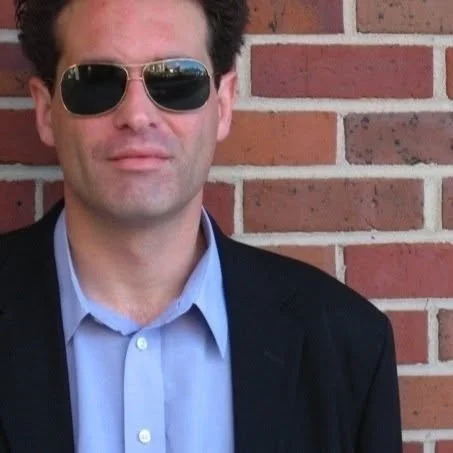
Louis Bourgeois was born in New Orleans, Louisiana. He is primarily a poet, but he has published translations, fiction, memoirs, poetry and interviews in over 200 magazines and journals in North America, Europe and Asia. He graduated from Louisiana State University with a BA in English and was the first graduate of The University of Mississippi’s MFA program in Creative Writing. He is the Executive Director of VOX PRESS, as well as the Program Director for the Mississippi Prison Writes Initiative.