
Carnac Dawn
by Alison Lock
It's early, that time before first light but after the deep dark of night. I open the door of the caravan, step out onto the grass, tuck my heels into my canvas shoes, lift my bicycle by the handlebars, and quietly wheel it away. With only a snuffle and a groan from the other sleepers, I have extricated myself.
I push down on one pedal and roll away down the slope to the sound of the crackling grit. Finally, when I reach the road, I sling myself over the saddle. As I pick up speed, the cold air streams over my bare legs. I luxuriate in the sense of aloneness. The lane towards the menhirs is silent, cobwebbed in a dewy mist, the light is merely a yellow tinge on a grey backdrop. I feel the hedgerows with their new-day wands brushing against me as I pedal on; goosegrass sticks to me, brambles scratch my legs. I know exactly where I am going, and I want to be the first to arrive, to feel the ache of the stones as they wake into a new day.
Yesterday, I visited the site with my family, skirting the perimeter along with the other tourists. It was noon, and as the sun blazed it caught on the flecked mica of the granite sending a starry glitter into the haze of heat. Despite wearing suntan oil and straw hats, the sun burned us, our faces reddened, and the children cried. It was not the right place to be, not when a little further on was the beach next to the lagoon-blue sea edged with shady Monterey pines. A field of old stones, however large and impressive, could not satisfy the desire for ice cream. But rather than another car journey in the heat, we decided to head back to the campsite. Here, with its ice-cold pool and water slides, the children could hang out with others, and we could wait for the bar to open. Then in the evening, if we felt inclined we could join the disco and its nightly conga that snaked around the tables, people holding on to the waist of the person in front, waving at others to join in. To be honest, it's not my idea of fun, though I'll join in rather than being seen to be a spoilsport. No point persevering with our afternoon trip, I secretly promised the menhirs, the standing stones, that I would return the next morning. Alone.
So, here I am, cycling towards them, leaving behind the sleepy campsite. Before I reach the main site, I stop at an opening in the hedge. It is hardly noticeable, just a raised mound of earth with a capstone jutting out from overgrown shrubs. Likely to be a dolmen, or a tomb, a single chamber megalithic grave. Here, the bones of the deceased will have long since been absorbed into the peaty Brittany soil. Before the preservation of such ancient sites, many had been used as sheep shelters, and some had their stones removed and taken away to be used for building materials.
The circle is everywhere, and has always been a symbol of wholeness, of completeness, the encompassment of spirit, of eternalness.
I decide this will be a safe place to leave the bike, half-propped against a bush, the front wheel turned out. I wonder what the occupier of the dolmen would have made of this spinning circle of metal and rubber, its spokes catching the light as if conjuring a spirit. The circle is everywhere, and has always been a symbol of wholeness, of completeness, the encompassment of spirit, of eternalness. Even the earliest prehistoric earthworks that consisted of a bank and ditch formed rings. Carving circles on the earth has always been the work of humans. Ancient cup and ring marks are found all along the Atlantic seaboard of Ireland, Wales, Scotland, France, Portugal, Spain and many other countries. A concave depression is made in the rock and surrounded by concentric circles. Nobody seems to know for certain what they mean, whether they are to mark a particular rock as a place of worship or a way of measurement. They could also be a petroglyph, a work of megalithic art.
I walk across the lane towards the gate and follow the path to the top edge of the site where I duck under the fence. I am in the field with the megaliths, and we are facing the rising sun. Before me are eleven rows of menhirs of many sizes and shapes. According to the information board, some are at least four meters high. At either end are the remains of stone circles, a cromlech containing 71 stone blocks at the western end, and another at the eastern end. In all, they stretch for 1165 meters by 100 meters. It's such a vast area to fill with these mammoth blocks of stone, and more extensive than Stonehenge, a place I only once tried to visit several years ago. I could not get beyond the perimeter fence without booking a guided tour, and at that time, apart from being a poor student, I was also averse to the idea of being a tourist. I felt I was more like a pagan returning to her roots.
I have always been attracted to stone circles, as if by some magnetic force, and instinctively I am drawn to this site at Carnac, in northwestern France. There is nothing rational about this impulse, but I know that I am not the only one; a huge amount of visitors come here every year. The original purpose of the site has been a mystery many have tried to unravel. One researcher, Howard Crowhurst, concluded that the geometric, arithmetic, and architectural principles of those who built the site at Carnac are still the same principles as those used by architects today. The builders of the site brought many of the stones from over sixty miles away. How they managed to do this is a mystery as there is little evidence of the people who built the structures. There is nothing to show that they lived on or even near the site, for no traces of Neolithic dwellings have been found. Some believe the stones are placed in their rows to exactly synchronize with the movements of sun and moon and that they were used as astronomical observatories. What we do know is that the site is in an active earthquake zone, and therefore the constant vibrations will cause the stone to have active electromagnetism.
Legends have built up over time in association with this site and others. From Carnac is a tale of petrification — Pope Cornelius (Bishop of Rome 251–253 CE) saw the site was filled with pagan soldiers who were coming to get him, and he used his magic powers to turn them to stone. Other megalithic monuments and stone circles are also imbued with myths of petrification, like The Merry Maidens or Mên-an-Tol in Cornwall. It is said that nineteen maidens, dancing on a Sunday, were punished by being turned into stone. The two megaliths a little way from the circle are the petrified remains of musicians who, so fearful of breaking the sabbath rules, had tried to run away when they heard the clock strike midnight.
I watch the great stones, and I see them as a kind of ancient lineage, a line stretching far into the past.
I am still standing here at Carnac in the pre-dawn light. Before long, at the campsite the tiny shop will be opening, the scent of croissants filling the campsite as it opens its doors. My children are in their sleeping bags, all warm and tousled; they will be stirring, ready to wake up to the morning sun. I watch the great stones, and I see them as a kind of ancient lineage, a line stretching far into the past. I am sure they are turning, very slightly with each second of increasing light, as if to salute the power of the rising sun. They are nodding at the dawning of a new day. The nineteenth century writer Guy de Maupassant is believed to have remarked that as you look at the menhirs, they seem to move and become infused with life. But these immense stones are so firmly fixed on the earth, how can they move? Perhaps, in the depths of our minds, they have the power of transformation — shape-shifters, magicians defined in stone.
It is barely light but the air is warm and still, and it happens quickly. The sun rises. Moment by moment, it boldly stretches across the sky in the east, and as it does, I feel a wave of energy coming from the stones. The sky is a crimson backdrop, and I am both exhilarated and afraid. Here I am, amongst a gathering of stone warriors. I look to see if I am being watched, but though I see no eyes, I know I am held in the sight of giants. It is three and a half thousand years BCE, and it is midsummer. The sun is glinting on the stones, warming them into life. And here I am, of little consequence to them, and yet I am part of the whole. At this moment, I am one of them.
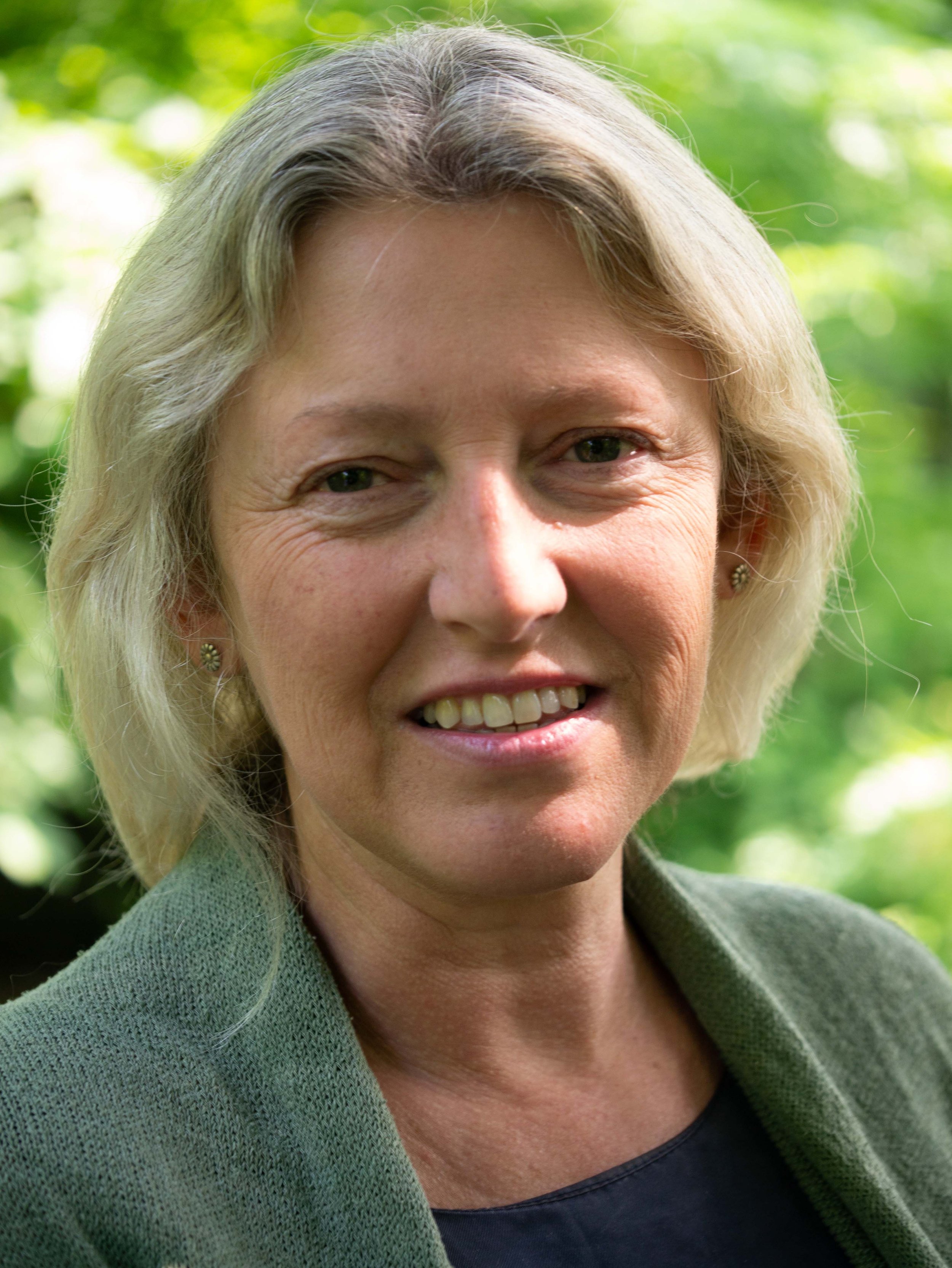
Alison Lock is a poet and short fiction writer whose work explores the meeting of inner life and landscape, seeking the spiritual within everyday experience. Her poetic sequence “Lure” was broadcast on BBC Radio 3. She has published several collections and pamphlets, most recently Thrift (Palewell Press, 2024). A trained facilitator of Life Writing for Transformation, she lives in North Wales and leads Poetry for Wellbeing sessions.