
Living Out a Calling
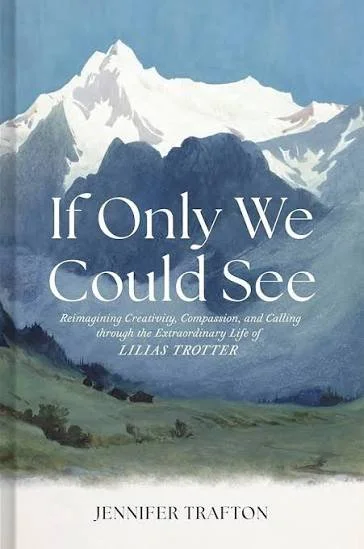
320pp., hardcover, $21.95
April 14, 2026
B&H Books
ISBN-13: 978-1087784526
For more than a decade, the life of Lilias Trotter (1853-1928) has guided mine. I first met this nineteenth-century British artist and missionary through Miriam Huffman Rockness’s 1999 biography, A Passion for the Impossible, which I read before moving to the Middle East. Later, as I battled depression, I wept healing tears while viewing the 2015 documentary, Many Beautiful Things: The Life and Vision of Lilias Trotter. I studied her 1890 booklet, Parables of the Cross,and posted her words above the sink where I feebly washed dishes and took my anxiety medications: “Take the very hardest thing in your life—the place of difficulty, outward or inward, and expect God to triumph gloriously in that very spot. Just there He can bring your soul into blossom.”
Before a recent conversation with Jennifer Trafton, I scribbled a list of “Lessons from Lily,” noting the ways Trotter’s life continues to instruct me. I wanted to tell Trafton how Lilias has helped me to live out my artistic calling in a country so like Algeria, where Trotter served for forty years. I wanted to tell her how often I struggle as a creative writer surrounded by missionaries with clearly defined identities, how I sometimes feel guilty that I don’t devote all of my energies toward relational ministry. I wanted to tell her how much I craved the fresh encounter with Lily—as her friends called her—that the new book would provide.
If Only We Could See, which Trafton describes as an encounter rather than a biography, came out two months after our conversation, and it did not disappoint. From its first chapters, I felt invigorated by the possibilities Trafton’s portrait of Lilias provided for a life like mine, and was pressed deeper into the tension between my vocations as a Christian artist and a cross-cultural worker.
Though Rockness’s A Passion for the Impossible emphasizes Trotter’s role as a missionary, Trafton’s If Only We Could See presents Trotter as an artist above all else, challenging the common assumption that she sacrificed art for ministry in North Africa. This assumption goes back to the stark decision that British art critic John Ruskin presented to Trotter in her early twenties: if she devoted herself completely to painting, he said, she could become the greatest artist of her generation. Ultimately, Trotter did not choose the path Ruskin laid before her—a decision that is often oversimplified, reducing her to someone who prioritized ministry over art.
Trafton’s nuanced interpretation of Trotter’s choice comes like a breath of fresh air. She does not present “artist” and “missionary” as competitive identities but rather as complementary aspects of a cohesive whole. “[Lily] was an artist even when she wasn’t painting,” Trafton writes, “and that essential way of seeing and being in the world affected everyone around her.” Whether serving among working girls and prostitutes in inner-city London or visiting Sufi mystics in the Algerian desert, Trotter’s artistic soul enabled her to see people with God’s eyes and love them creatively.
Trafton insists that Trotter’s art was not confined to canvases and sketchbooks. Her artistic vision extended into every part of her life, and especially impacted how she loved people. Trotter’s ability to really see others and listen to them enabled her to bring God’s love to them in ways that suited them in their specific circumstances. Trafton invites her readers to consider how they might apply creativity to their friendships with the people around them, how they can enter into their stories and help them see God’s glory, the meaning beneath the hard, quotidian tasks of life.
Throughout If Only We Could See, Trafton quotes heavily from George MacDonald, a pastor, theologian, and contemporary of Trotter known for his writings on Christian imagination. In his 1868 novel The Seaboard Parish, which young Lily read as a serialized magazine story, MacDonald writes that “showing us what we sense or feel but cannot express is the gift [artists] give to the rest of us.” For Trafton, MacDonald’s novel offered Trotter a model of artists as those who “have a holy calling, as those who make visible and tangible the meanings buried in the beauty of God’s world and in the hearts of His creatures.”
[Trotter’s] art and ministry demonstrate that artistic vision submitted to the direction of the Creator can infuse every part of a believer’s life.
If Only We Could See also presents a nuanced portrait of John Ruskin—the influential art critic who mentored Trotter and told her she could become a great if she gave herself completely to developing her art”—and shows how his beliefs about artists complement those depicted in MacDonald’s novel. “Ruskin had elevated the role of the artist to that of visionary and prophet,” Trafton writes, “someone who sees and delights in the deeper truths symbolized in nature and is able to convey those truths to others.” Ruskin viewed art-making as worship, and he believed in the inherent spirituality of creative work. MacDonald and Ruskin affirm that the ability to see and communicate is the artist’s gift—and can be part of one’s calling as a believer.
Over and over, Trotter’s life shows us that art is not limited to high-brow, museum-worthy canvases. When taken together, her art and ministry demonstrate that artistic vision submitted to the direction of the Creator can infuse every part of a believer’s life. As such, Trotter stands as a worthy mentor for Christian artists and art lovers of all types, regardless of job or location. As Trafton writes, “[Trotter’s] sacramental vision of the world and her holistic integration of art and spirituality have profound relevance today.”
More than ten years along the path with Lilias Trotter, I feel her taking my hand again and leading me on a higher road—one that more fully integrates my identity as an artist with my work in the world. Like the dandelion that she writes about in Parables of the Cross, I walk this path with my gifts and abilities surrendered to the Spirit’s wind,“stand[ing] ready, holding up its little life, not knowing when or where or how the wind that bloweth where it listeth may carry it away.”
Esther Kline is a creative writer living in the Middle East.