Making Sense of Things in Community: Poet Jon Bishop
In Conversation with Christopher Honey
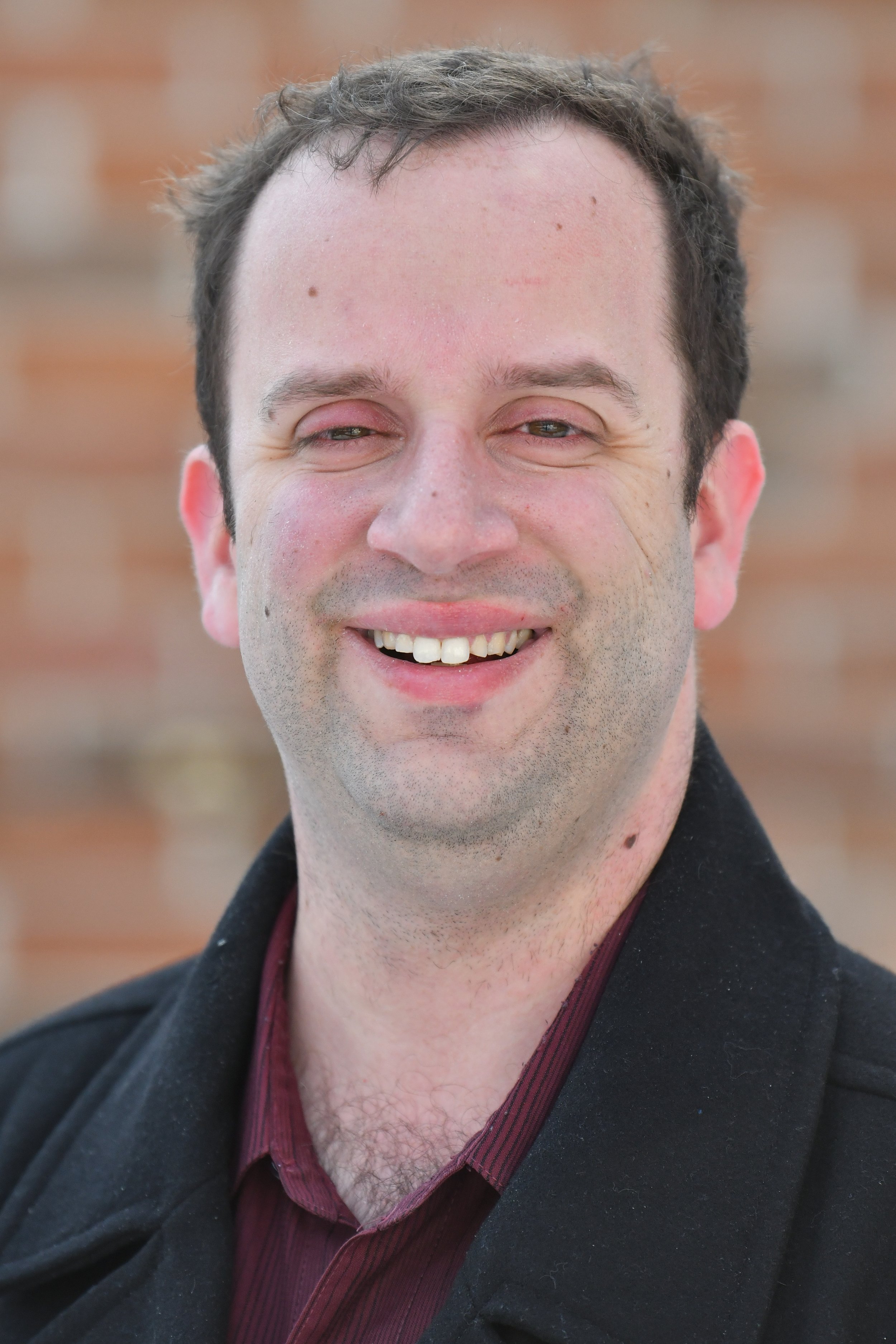
Jon Bishop holds an MFA in poetry from the University of St. Thomas in Houston. His work has appeared in both print and online, and he lives in New Hampshire with his family.
Note: Vita Poetica Interviews Editor Christopher Honey also graduated from the MFA program at the University of St. Thomas in Houston.
The following transcript has been edited for length and clarity. A version of the conversation can be found in the audio interview above.
Christopher Honey: Jon Bishop, thank you for coming to speak with us at Vita Poetica. So you are a poet, an essayist, you’re an educator. You teach English and theology. But in a past life, you were almost a Catholic monk, is that right?
Jon Bishop: Yes, so in college, I reverted back to my faith, embraced my Catholic birthright, and immediately began thinking about my place in the world. And the [monastic] community that founded my alma mater, Assumption College, now University, the Augustinians of the Assumption — I grew close to them. They used to have me over for dinner as a student, when I was 19. I felt a deep connection to them; I felt like I could see myself with them.
So after my time as a journalist, I landed a job with them. That was in 2016. It was a communications position that ran the gamut from assisting in the vocations office to putting out the newsletter for the community, even helping with development at times.
Then later, in 2016 after speaking with my spiritual director, who was a Jesuit, I decided I’m single, I’m working for the community, I think it might be time for me to really be serious about whether I’m called to be a priest or a brother. So I applied to be a candidate. I was accepted.
I was a candidate from August of 2016 to April of 2017, at which point I left because I said, I’m not entirely sure I’m called to this. But I remember the last night in the community, there was an air of sadness. I went home thinking, What have I done? Maybe I made a terrible mistake here. So I began immediately thinking, I need to give this another go.
I was readmitted to the community in January of 2018 as a half-candidate / half-postulant. After a few more months, it came time for them to say, Are you going to be a novice with us or not? And after a day-long silent retreat — [during] which I reflected on whether I wanted a family or to become an Assumptionist, and I was open to being either a priest or brother — my desire to have a family won out. That’s the only reason I didn’t stay with them. And sure enough, a year later, I met the person who’s now my wife. So it seems like I think my discernment was a success.
But I am still close to the Assumptionists. I’m a lay Assumptionist. I remember one of the key pieces of advice that one of them told me was, “Our charism is not for us only.” So I have taken to heart their mission, which is education, intellectual work, among other things. And I make that part of my day-to-day being.
CH: What were some of your spiritual practices? You didn’t break with the Catholic Church or leave the church. You just found another calling: family. But how have you carried some of the spiritual practices you learned into your life, and how has it affected your writing?
JB: In terms of writing and intellectual stuff, many of the Assumptionists that I was close to, or am still close to, were deeply influenced by Father Ernest Fortin, who was a major intellectual figure in the 20th century. He was a Straussian figure, a friend of [philosopher] Allan Bloom’s. I feel like I sort of knew him secondhand in some ways, because they would always talk about him.. And so in many ways, [the Assumptionists’] intellectual interest rubbed off on me. The Assumptionists value liberal education, and that has sort of become my lodestar. I wouldn’t have known about that had I not attended Assumption College.
Many of the spiritual practices that I liked in the community are honestly harder to do outside of the community, like daily mass. And it’s not to say that you can’t do those things. But you know when your water heater is breaking or something else… life takes precedence. But Father [Emmanuel] d’Alzon, who was the founder of the Assumptionists, has talked about disinterestedness, and what he meant by that was, again, a sense of detachment and openness to a variety of things, right? And I’ve tried to make that part of my personal mission as well.
CH: I’ve seen your poetry in a number of journals, and I’ve never seen one about a water heater. That piqued my attention, because you write a lot of poems about ordinary life and the small encounters and small things, and how you relate it to your spiritual life.
JB: Really what’s interesting is, even though I don’t write fiction as much anymore, the interests or the sort of story that you would see and develop is something I try to do in poetry. People like Raymond Carver, Denis Johnson, Cormac McCarthy, Ray Bradbury, are people I consider formative. Sometimes I write what could be seen as dirty realism in poetry. I do narrative poems about domestic life. I want to be clear, by the way, I usually don’t write about myself, but these are just sort of stories I’m creating. But I do like to highlight the ordinary.
What’s funny is a close reader of my poems, I think, would be able to tell when I’m writing about myself. I did a poem about a guy waking up with his dog to let the dog outside to go to the bathroom, and just appreciating nature, right? That’s close to the bone; that is my life. I did a recent poem where it was really about my wife and I on a date, and I did one on my snowblower and it [not] performing as well as I would have liked. These are all ones from my life, but other poems where it’s a kind of domestic fallout, or somebody being alone and drinking, right? These are me trying to mimic Raymond Carver, but also doing my own voice at the same time.
CH: I’ll ask more about your education later, but I do know you’ve got two advanced degrees, but you have found your calling not in academia, but in teaching in Catholic high schools. You’ve written some essays I love that push back against some sort of defeatism or declinism regarding young people and students. They talk about your experience teaching in a spiritual environment and trying to impart the intellectual tradition that you’re engaged with in students.
JB: I’ll be candid and say that my plan was to work at a university. I sort of fell into high school teaching. That was some of the appeal of the Assumptionists right? They would have liked to or likely would have sent me to get a PhD, and I would have been an Assumptionist elsewhere. But when I left the community, I got hired as a campus minister and teacher at a Catholic school that is now closed. And I remember thinking — because I hadn’t met my future wife yet — You know, God, what are you trying to do to me? I just leave the community and what? What’s going on now? And being hired to preach to teenagers, is this like a cosmic joke you’re playing on me? But I grew to really love high school teaching. Because it’s sort of like teaching at its essence, right? There aren’t additional pressures that you would see about like publishing, etc.
I think we’re naturally spiritual. We want to know. We want to know reality with a capital R.
And you know, the essays you mentioned, one thing that I found at my current school is that they give teachers a kind of freedom, and I had always dreamt of designing a course that mimics what you would see at a Catholic college, in which students really dig into great books and ask questions like “What does it mean to live a good life?”; “What is my God-given purpose?”; “What is virtue?”; “How do I live a good life?”; “How do I flourish?”
So I was finally given that opportunity last year, and I found that students want this, they enjoy this, they rise to the occasion, and what was also telling was, there’s so much talk about how kids don’t read and they don’t write as much, and that’s all true, right? But we have to wonder, when somebody’s fifteen, they’re not going to be totally autonomous; we have to educate them.
So to me, it just raises questions about what we are doing as a culture that is depriving students of these ideas and great books. I think we’re naturally spiritual. We want to know. We want to know reality with a capital R. And I think Blaise Pascal was correct when talking about distractions. I just think we are in a real age of distractions. I’ll just name drop somebody else now. I mean, I think Cardinal Robert Sarah is correct that when we enter into the silence is when, paradoxically, we can encounter God the most.
CH: I know you got your first advanced degree from Salem State University in English. But then, sort of mid-career, you seem to keep getting called back to spiritual institutions, and you went to go get a Master of Fine Arts. And I gather you’re part of the very first cohort of this program.Can you tell me about it?
JB: I had always wanted an MFA. That was something that I was thinking about back in college. Because I had interests in a variety of fields—theology, philosophy, writing, literature, politics—it was like, which one do I choose? I don’t know! One of my undergrad professors, Dan Mahoney, was in the politics department, and had said to me years ago that I should look into studying with James Matthew Wilson at Villanova. And when he had said that to me, I had known who he [Wilson] was, I read his poetry, but I remember thinking, I’m teaching, I’ve already been established. I can’t move as easily.
But I remember in 2021, I was just scrolling through Twitter [now X], and I followed James on Twitter, and I saw that he had tweeted about this new venture. He was leaving Villanova to go to the University of St. Thomas in Houston, Texas, to start this online MFA program, and I remember just thinking this felt providential to me, so I contacted him. He was very eager that I apply. He said that this is why we designed this program, so people could do these things. And what was appealing to me about that program was, in addition to helping you develop your craft, it also was a kind of great books program in the Catholic intellectual tradition.
So I was accepted, and it is one of the best things I’ve ever done. It introduced me to so many great ideas and thinkers I never heard of, or I had heard of them but I didn’t read them much. I met great people, I had great teachers, and I was writing better than I ever thought I could. So I found it to be a transformative program.
CH: What for you is the relationship between literature, education, and the Catholic spiritual tradition, and maybe in particular, the Assumptionists’ spiritual tradition?
JB: For me it’s about formation. We have to be formed. I think that's one of the great messages in the first creation story in Genesis, about cultivation. How do we cultivate ourselves? And I think literature provides that formation. William Deresiewicz said reading Jane Austen provided him with a moral education. So I think for me, all of this is again, it’s about formation. How do I become my best self, in light of eternity?
CH: In a lot of your poetry, though not all of it is, is formal. You talked about formation and cultivation. How do you relate that to the specifics of your poetics? You mentioned the minimalism and the small bits of creation, the looking out upon the natural world. But what about form?
When you look at forms out in the world, there’s something that is appealing about forms—the perfection of form.
JB: I’ll be candid here in that I never planned on or wanted to write formal verse. That was the sort of main approach of the program. I was kind of kicking and screaming. I did not want to do it! I was a free-verse guy. But then I quickly found that writing in meter answered questions that I had about poetry that I was never successfully able to find before. Like, how do I break a line? Well, if you hit ten syllables, you move to the next line. That was a clear, direct answer. Before I’d gotten, Well, when you want to, or When it’s a breath, or aesthetically, when you like how it looks on the page. Which is all fine, but like I’m somebody who likes clarity, and this provided me with clarity.
I found that writing in meter controlled my writing in a way that I’d never seen before, and I made the decision that I wanted to stick with this, that I wanted to keep doing it. When you look at forms out in the world, there’s something that is appealing about forms—the perfection of form.
I’m sounding like a Christian Platonist now, which, again, is something that came out of the program. But something I tell students [is that] we think about the beautiful, right? We admire it. We call Michael Jordan’s jump shot beautiful. And why do we do that? Well, because of the form; we’re admiring the form. So it speaks to something in us that can only be explained again by spiritual realities, what Edmund Burke called the sublime, etc.
CH: You also talked about cultivation. It seems like you threw yourself into ways to cultivate yourself spiritually, with your relationship with the Assumptionists, with the school, but also the process of discerning with them and finding a different calling, and then cultivating intellectually. And of course, you’re cultivating young people right now. How does cultivation play into your larger practice, and how do you view it in the world?
JB: I think there’s a kind of aimlessness today. I certainly felt that aimlessness, but the grounding I experienced when I came back to the faith, when I recognized that I was made in the image and likeness of God, that God loved me unconditionally. That’s something that, by the way, I still have to remind myself of, right? The world can be a chaotic place, but grounding yourself in that can be like a balm.
People want to know, people want answers, people want to think about what it means to be human. What is my purpose? What am I meant to do? And again, these kinds of eternal questions are not bound by time; they’re not bound by culture. The Jews spent time wandering in the desert before they found Canaan, right? When they returned to the promised land, or Canaan, there was still a kind of wandering afterwards, right? They were breaking the covenant, etc. So again, maybe this aimlessness is not new, but nevertheless, because we live in a deeply technological, distracting age, I think that if we’re not careful, that aimlessness can become permanent. So I think that’s why education, cultivation, etc, is so important.
CH: What do you think is the importance of spiritual communities for the arts in general? Literature, visual [arts], music? Obviously you are a writer, so speaking primarily about the written word.
I think having those spiritual communities where people of faith can think through not only theological questions, but creative questions, together is paramount.
JB: I think it’s needed. I think that there is something also inherently spiritual about the arts, right? I mean, there’s a reason that every culture, or many cultures, have developed epic poems, right? Like the ancient Malagasy in Madagascar had an epic poem [Ibonia], right? I would assume they likely never met the Anglo-Saxons when they were developing Beowulf. There was no conference about this, right? So there’s something, again, inherent about human beings, that we want to make sense of things. That’s something that, by the way, Father Dennis Gallagher once said. Education is about making sense of things. I think having those spiritual communities where people of faith can think through not only theological questions, but creative questions, together is paramount. That was one of the great elements of the MFA program. I met so many people who were willing to ask these questions, but also ask questions about, how do I hit the rhyme on this poem?
CH: Who are a couple artists, whether writers, poets, essayists, filmmakers, painters, sculptures, that you find have a real spiritual and artistic resonance for you?
JB: That’s hard to pin down. For novelists, Cormac McCarthy, Denis Johnson, [Ray] Bradbury, Don DeLillo.
Poets? Nicole Seeley. Of course, James Matthew Wilson. Some people from the MFA program: Carla Galdo, Paul Pastor.
I’ve been blessed to get to meet so many great writers whom I admire. James [Matthew Wilson] of course, who’s become one of the best teachers I’ve ever had. Dana Gioia — I got to meet him through the program. I’ve befriended Okey Ndibe, who’s a Nigerian American novelist. You know, his book, Foreign Gods, Inc. is probably one of the best Catholic novels I’ve read in a while. Flannery O’Connor, Marilyn Robinson… it’s almost too many.
For painters I really like Edward Hopper. Nighthawks is one of my favorite paintings. For filmmakers, Terrence Malick, Paul Thomas Anderson.
CH: What particularly makes good spiritual art? What is that proper nexus? You mentioned folks like Denis Johnson, who deals with some very grubby things, you might say—addiction, war, and trauma. What makes a great spiritual work of art? What are the factors?
JB: I think it has to look at reality honestly. Charles Péguy said you have to kind of tell what you see. And I think that’s what it should be. I think what we often run into when we see spiritual arts is a kind of kitchiness. I think there’s a sense of being pandered to, right? And I think that’s not what art is supposed to be. I think it has to look at reality honestly.
CH: Jon, thank you so much. I know that your students are incredibly lucky to have you. I’m grateful for sharing your experience—almost becoming a monk, but then finding a new calling as a teacher, poet, and a writer.
JB: Thank you so much. I always love talking about my faith, liberal education, and writing and poetry. I could do this for hours. So thank you for taking the time, and I’m grateful that we were able to speak about all this.